










Why Early Learning Matters
The early years of a child’s life are foundational to their entire educational journey. During preschool, children experience an exponential growth in their cognitive, social, and emotional abilities. Research shows that quality early learning programs significantly affect children’s school readiness, later academic performance, and overall well-being. When adults nurture children’s innate curiosity and love for discovery, they lay the groundwork for confident and inquisitive lifelong learners. Choosing an environment such as Nocatee preschool can play an essential role in supporting this vital stage of development, providing specialized guidance and interactive spaces tailored to young learners.
Early learning is more than memorizing facts; it’s about helping children develop a genuine love for exploring the world. In today’s fast-changing society, equipping children with adaptable problem-solving skills, creativity, and resilience from a young age is crucial. Preschool programs focusing on open-ended questions, hands-on experiences, and collaborative projects are especially effective in nurturing this mindset.
Building a Strong Foundation Through Play
Play is at the heart of effective early learning. Children develop physical motor and cognitive abilities through activities such as building blocks, role-playing, outdoor games, and sensory exploration. Play-based learning is renowned for promoting critical skills such as decision-making, self-regulation, cooperative behavior, and creativity. In play-rich environments, educators act as guides, providing tools and encouragement but allowing children the freedom to direct their own experiences.
The benefits of play extend far beyond academics. As children negotiate rules in group games or solve puzzles, they build patience, perseverance, and self-confidence. According to the American Academy of Pediatrics, play is essential for healthy child development. It should be integrated into preschool environments as a central component of the curriculum.
Encouraging Curiosity and Questioning
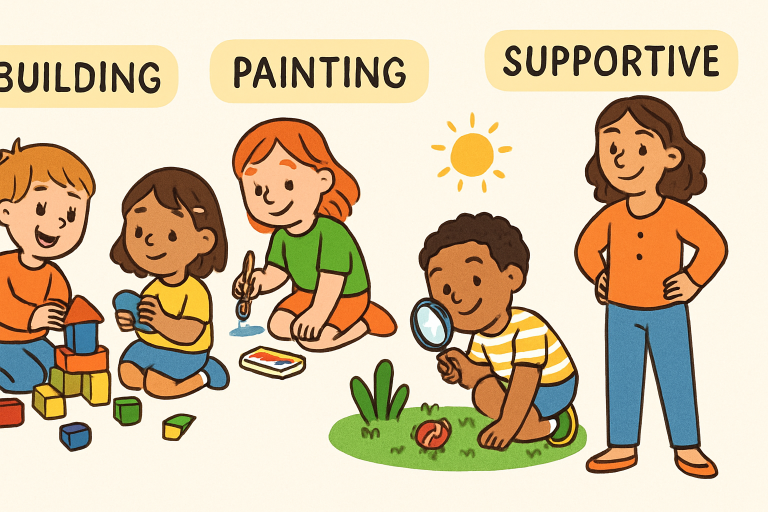
Children’s natural curiosity fuels their desire to understand how things work. Children are empowered to become critical thinkers when adults and teachers make space for wonder—by inviting questions, offering exploration opportunities, and sparking discussions. Asking open-ended questions such as, “Why do you think the leaves change color?” or “How can we solve this problem together?” boosts creative thinking and a love for learning.
Rather than simply providing answers, effective educators help children develop strategies to investigate and discover solutions on their own. Activities like nature walks, simple science experiments, or guessing games can transform everyday moments into chances for discovery. Encouraging curiosity is a cornerstone of quality early childhood education.
The Role of Art and Music in Preschool
Artistic and musical experiences give preschoolers influential outlets for self-expression and imaginative thinking. When children paint, sculpt, dance, or sing, they develop essential fine motor skills, boosting their understanding of language, rhythm, and patterns. Music activities such as sing-alongs and rhythmic movement foster memory retention and auditory discrimination, while visual art projects allow creativity and emotional expression.
Early exposure to art and music cultivates creativity and supports emotional intelligence and cultural awareness. Access to a range of art materials and opportunities for musical play enables children to explore and communicate in non-verbal ways, building confidence and a love of learning across multiple domains.
Developing Social Skills Through Group Activities
Preschool offers an ideal environment for children to build and practice social skills. Activities like circle time, partner games, and collaborative storytelling foster critical abilities such as sharing, turn-taking, empathy, and conflict resolution. Working together on group art projects or participating in team-based challenges teaches children to listen to different perspectives and solve conflicts constructively.
Social-emotional development is just as important as academic learning in early childhood. When educators and caregivers model respectful communication and positive group dynamics, they show children how to build healthy relationships and work as part of a team—skills that will benefit them throughout their lives.
Making Learning Part of Daily Life
Many valuable learning experiences happen outside the classroom. Integrating educational moments into daily routines encourages children to see learning as a natural and enjoyable part of life. For example, parents can ask children to count the number of apples in the grocery cart, identify shapes during a walk, or describe the sounds they hear in the neighborhood. Laundry sorting, cooking, and observing nature’s changes promote early literacy, numeracy, and scientific thinking.
When families and caregivers model enthusiasm and curiosity, children quickly adopt these attitudes. Consistent routines and visible displays of excitement for discoveries help children feel safe, motivated, and eager to participate in their learning journey.
Supporting Children With Different Needs
Every child learns at their own pace, with unique strengths and challenges. Inclusive preschool programs are designed to adapt instruction and activities so each child can thrive. Simple strategies such as providing clear visual supports, breaking down tasks into small steps, and offering gentle encouragement help ensure that all children feel successful. Collaboration between educators, families, and specialists maximizes each child’s potential and nurtures a positive attitude toward learning.
Cultivating patience, understanding, and an individualized approach can make a tremendous difference for children with diverse abilities. The goal is to create a community where every child feels valued, included, and empowered to learn, regardless of their starting point.
Conclusion
Nurturing curiosity in young children sets the stage for a lifelong passion for discovery. Families and educators can create environments that inspire engagement and joy by combining play, creativity, and exploration. Small, consistent efforts—like storytelling, hands-on activities, and open-ended questions—encourage children to view learning as exciting rather than daunting. Supporting their natural interests builds confidence, resilience, and imagination. When children feel empowered to explore, they develop a foundation for future success both academically and personally, carrying curiosity into every stage of life.