









Unveiling the Subsurface: The Role of Downhole Cameras
The oil and gas industry relies on the integrity of wells for safe and productive operations. However, traditional diagnostic tools often fall short, producing information inferred from indirect measurements rather than direct observation. The advent of downhole camera inspection has changed this dynamic, providing operators with high-resolution, real-time visual access to the wellbore. With precise imagery, professionals can accurately assess conditions and plan interventions with confidence. For operators seeking to elevate their maintenance strategies, inspection delivers a clear, tangible advantage over older inspection methods.
Unlike conventional logging tools, downhole cameras enable inspectors to see the actual state of casing, liner, and tubing, as well as to confirm the presence and origin of blockages or damages. This concrete evidence not only clarifies the scope of the problem but also supports faster, more effective solutions.
As regulatory pressures grow and the industry’s focus on environmental and operational safety intensifies, robust well integrity checks are critical. Downhole camera inspection serves as a vital tool for compliance and risk mitigation, giving decision-makers peace of mind and comprehensive documentation for audits and future planning.
This direct vision into the wellbore is increasingly viewed as a best practice for both routine assessments and complex troubleshooting scenarios. The role of visual diagnostics in modern oilfield operations continues to expand, empowering teams to act decisively and proactively to maintain asset value.
Enhancing Well Integrity Assessments
Sustaining well integrity is a proactive process, requiring periodic inspections to identify and address emerging risks before they escalate. Downhole cameras are especially useful in detecting issues such as:
- Casing Wear and Corrosion: Real-time images reveal areas of deterioration with clarity, so operators can execute targeted repairs, preventing catastrophic failure and costly downtime.
- Obstructions and Debris: Visual identification and precise location of blockages streamline remediation, facilitating swift restoration of optimal flow conditions.
- Perforation Evaluations: Direct verification of perforation size, placement, and integrity improves stimulation outcomes and overall well performance.
By greatly reducing reliance on interpretation and guesswork, downhole cameras promote confidence in inspection results and intervention strategies. This clarity is paramount in high-pressure situations and when making decisions that affect asset protection and production continuity.
Real-Time Monitoring and Cost Efficiency
The integration of downhole camera systems with real-time monitoring platforms is transforming the industry’s approach to well maintenance. Instead of reacting to events after they disrupt operations, teams can now watch subsurface changes as they occur and deploy immediate, evidence-based responses. It reduces unplanned interventions such as emergency workovers, lowering maintenance costs and risks. Recent advancements in real-time monitoring technology have been shown to significantly decrease overall operating expenses while maximizing the lifespan and profitability of assets.
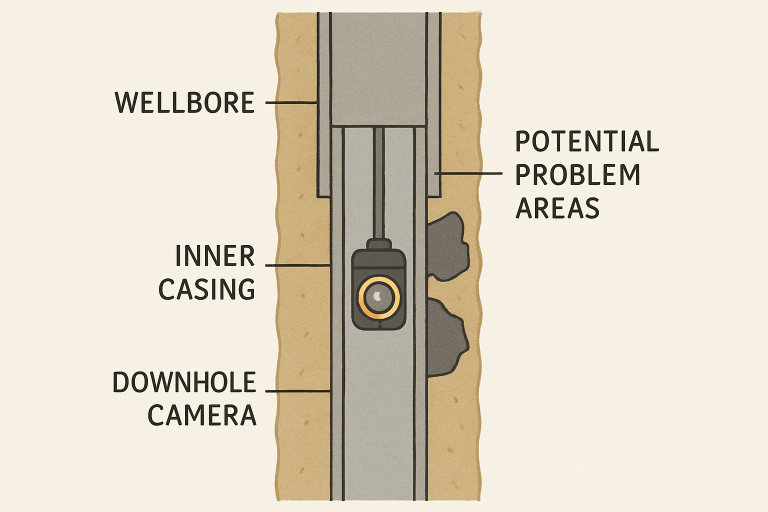
Advancements in Downhole Camera Technology
Innovation in downhole camera technology has dramatically improved the scope and quality of inspections. Today’s systems commonly feature:
- High-Temperature Tolerance: Robust engineering ensures dependable performance in extreme thermal gradients and harsh environments deep below the surface.
- 360-Degree Imaging: Complete, panoramic wellbore coverage provides a holistic view, crucial for detecting subtle defects or confirming integrity across large diameters.
- 3D Visualization: Enhanced spatial awareness and depth perception support precise measurements and sophisticated planning for interventions or repairs.
These powerful enhancements have broadened the practical applications of downhole camera systems, making them indispensable for both routine surveillance and specialized integrity investigations.
Conclusion
Downhole camera inspection represents a breakthrough in well integrity management. With the capacity to deliver real-time, high-definition imagery of the subsurface, these tools promote confident decision-making, improved asset longevity, and lower total cost of ownership. As technology continues to evolve, the adoption of downhole cameras for routine inspection and emergency troubleshooting will only increase, setting a new benchmark for excellence in the oil and gas sector.