









Key Takeaways
- Hydro excavation uses pressurized water and vacuum systems to precisely remove soil.
- This technique significantly lowers the risk of damaging underground utilities.
- The method is adaptable to various applications and soil conditions.
- Hydro excavation is environmentally friendly and proves cost-effective in many scenarios.
Table of Contents
- Introduction
- How Hydro Excavation Works
- Advantages of Hydro Excavation
- Common Applications
- Safety Considerations
- Environmental Impact
- Cost-Effectiveness
- Conclusion
Hydro excavation has fundamentally changed the excavation landscape by introducing a safer and more precise approach to digging. This method uses highly pressurized water, along with a vacuum system, to break up and remove soil. These innovations greatly reduce the risk of striking underground utilities or damaging surrounding structures during excavation. As a result, hydro excavation is increasingly popular for industries that require delicate, accurate soil removal.
Beyond protecting critical infrastructure, this policy streamlines excavation projects, reducing both time and labor requirements. The dual action of water and vacuum ensures that work sites remain cleaner, safer, and more controlled. In areas with complex utility networks, the reduced risk profile has made hydro excavation a standout solution for risk-averse contractors and municipalities alike.
Notably, the eco-friendly nature of hydro excavation extends its impact beyond safety, contributing to sustainable land management practices. By disturbing only the necessary amounts of soil, this method avoids excessive environmental degradation, enabling the efficient completion of sensitive projects in urban and rural landscapes.
Hydro excavation’s versatility means it can handle different soil types and cold conditions, making it suitable for a wide array of industries. As demand for safer, cleaner, and more sustainable excavation techniques grows, hydro excavation continues to set the standard in modern construction and utility projects.
How Hydro Excavation Works
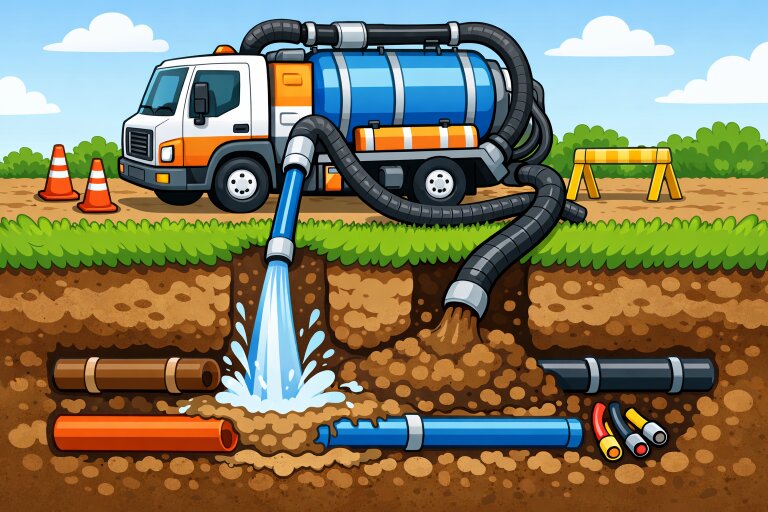
Hydro excavation operates using a two-stage process. First, operators direct a high-pressure water jet at the soil. This jet immediately loosens the earth, creating a slurry of water and dirt. After breaking up the soil, the second stage involves using a powerful vacuum to remove this slurry, which is then transferred to a debris tank. The highly targeted stream of water is ideal for limiting disturbance outside of the excavation area, making it a precise alternative to traditional mechanical digging methods. According to the United States Environmental Protection Agency, these processes also help reduce the risk posed by manual exposure to hazardous materials in the ground.
Unlike heavy machinery that can inadvertently crush pipelines, cables, or tree roots, hydro excavation delicately exposes utilities without contact. This precision is especially crucial in cities where the underground is congested with critical infrastructure.
Advantages of Hydro Excavation
There are multiple advantages to adopting hydro excavation over conventional digging techniques. Precision is perhaps the most prominent benefit, as the narrow jet of water allows for high accuracy in both confined and open spaces. For construction and maintenance crews, this translates to fewer project delays caused by accidental damage or required repairs. Safety is emphasized throughout the process. Because operators remain in control, working at a distance, the chances of injury from cave-ins or collapsed trenches are drastically reduced.
Another significant advantage is versatility. Hydro excavation excels in all soil conditions, including clay, sandy earth, or even frozen ground. With adaptability to different climates and terrains, it meets the needs of diverse industries such as gas, telecom, water utilities, and transportation.
Common Applications
Hydro excavation is widely used wherever careful and precise soil removal is required. Utility locating is one of the most common applications, as it safely exposes buried utilities prior to installation, maintenance, or repair activities. This technology is also suited to trenching, which is essential for cable and pipe installations, enabling narrow, controlled cuts without excessive earth removal.
On construction sites, hydro excavation assists with effective debris removal. It can clear workspaces of unwanted material without disrupting areas that must remain undisturbed. In landscaping and municipal projects, workers can access hard-to-reach areas without harming nearby vegetation or existing structures.
Safety Considerations
Safety remains a top priority in hydro excavation procedures. Operators are highly trained to manage the equipment and the high-pressure systems involved. Strict adherence to established safety protocols, including proper personal protective equipment and regular equipment checks, is required to prevent accidents. Keeping machinery well-maintained is essential. Routine inspections ensure there are no leaks or wear that could compromise the process or create hazards for personnel or bystanders.
Environmental Impact
Hydro excavation promotes environmentally responsible land use. Its methodical digging causes minimal upheaval to the surrounding landscape. Traditional machinery often tears up large amounts of soil and plant matter, while hydro excavation removes only what is necessary for the task. This targeted removal preserves vegetation, prevents unnecessary earth disturbance, and minimizes the spread of harmful contaminants.
Hydro excavation is also environmentally responsible in another way: most units capture and contain the extracted slurry, preventing runoff and groundwater contamination. The contained debris can be transported and disposed of safely, reducing the risk of pollution.
Cost-Effectiveness
Initial investment in hydro excavation equipment may seem high, but the long-term economics are favorable. Preventing utility strikes and worker injuries significantly reduces the cost associated with project delays, repairs, and insurance claims. Hydro excavation also typically requires fewer labor hours compared to manual or mechanical excavation methods, as the powerful equipment accelerates the process and cleans up work areas more efficiently.
Speed and precision equal shorter project durations, freeing up resources for clients and contractors alike. Additionally, because this method greatly reduces the likelihood of job-site accidents or rework caused by errors, it delivers savings across the board.
Conclusion
Hydro excavation is a modern, non-destructive excavation method that combines accuracy, efficiency, and environmental stewardship. Its wide applicability and comprehensive safety benefits have redefined expectations for the excavation industry. For those seeking a method that prioritizes both project integrity and environmental protection, hydro excavation sets the benchmark for quality and reliability.