








Pests can do more than create an inconvenience inside your home. Common household pests can damage wood, wiring, insulation, stored items, lawns, and even hidden structural areas before the problem becomes obvious. Understanding which pests cause the most damage, what warning signs to watch for, and when to contact a pest control professional can help homeowners protect their property, reduce infestation damage, and learn how to scale pest damage before small issues become costly repairs.
Infestation Can Cause Serious Physical Damage To A Home’s Structure
Pest infestations can cause serious structural damage because many pests do not simply live inside a home. They chew, tunnel, nest, contaminate, weaken, and disturb the materials that help the home stay dry, insulated, safe, and stable.
Termites and carpenter ants can compromise wood framing, floor supports, beams, trim, and subflooring. Rodents can gnaw through wiring, insulation, vapor barriers, drywall, and plumbing components. Moisture-loving pests can also point to hidden leaks or drainage issues that are already weakening parts of the home.
The danger is that much of this damage happens behind walls, under floors, inside crawl spaces, in attics, or below the soil line. A home can look normal from the outside while pests are weakening materials behind the drywall or under the floor. By the time visible signs appear, the infestation may already have affected important building materials, and the infestation damage may be more advanced than it looks.
The bigger issue is that pest damage rarely stays isolated. A small entry gap can lead to rodents in the attic. Rodents can flatten insulation, chew wiring, and contaminate stored materials. Damaged insulation can make rooms harder to heat and cool. Chewed wiring can create fire risks. Moisture around that same area can attract insects that prefer damp wood. What began as “a pest problem” can turn into an electrical, insulation, air-quality, moisture, and repair problem.
This is why pest infestations should be treated as a home-protection issue, not just a nuisance. The costliest damage often comes from what pests disturb while they are nesting, feeding, tunneling, or trying to move through the house.
Common Household Pests To Watch For
The most common household pests include ants, cockroaches, termites, rodents, spiders, flies, mosquitoes, fleas, ticks, bed bugs, silverfish, pantry pests, wasps, and occasional invaders such as earwigs, stink bugs, centipedes, and millipedes. Outdoor pests such as fire ants, grubs, and chinch bugs can affect the safety and appearance of the yard and may eventually move closer to entry points around the home.
The most concerning common household pests are the ones that reproduce quickly, hide well, contaminate food or surfaces, bite or sting, or damage building materials. A useful way to think about them is by the type of risk they create. Termites, carpenter ants, carpenter bees, and wood-boring beetles threaten wood. Rodents threaten wiring, insulation, stored items, and sanitation. Cockroaches, flies, and pantry pests threaten food areas. Fleas, ticks, mosquitoes, and bed bugs create bite-related concerns. Wasps and fire ants create sting risks. Silverfish and cockroaches often point to moisture, clutter, or hidden harborage areas.
Termites, carpenter ants, and rodents deserve special attention because they can damage a home while staying mostly out of sight. Cockroaches are also a major concern because they can spread bacteria, trigger allergies, and survive in hidden areas where moisture and food crumbs are available. If sightings become frequent or appear in kitchens, bathrooms, or multiple rooms, contacting a cockroach exterminator can help locate the source and stop the infestation before it spreads further.
Homeowners do not need to identify every insect perfectly at first glance. They should pay attention to repeated sightings, where the pest appears, whether the problem is spreading, and whether there are signs of damage, moisture, droppings, odor, or nesting material nearby.
Destructive Pests That Damage Homes
The most destructive pests are the ones that can damage a home while staying hidden. Termites are often considered the most destructive household pests because they feed on cellulose materials, especially wood, and can quietly damage structural components for months or years. Subterranean termites are especially concerning because they can enter from the soil and remain hidden inside walls, floors, and framing. By the time a homeowner notices soft trim, damaged flooring, or hollow-sounding wood, the colony may have been active for a long time.
Carpenter ants are also destructive, although they do not eat wood. They excavate galleries inside damp or softened wood to build nests, which can weaken trim, framing, window areas, decks, and wall voids over time. Their presence often means there is damp or softened wood somewhere in the structure, which makes them both a pest problem and a possible moisture warning sign.
Rodents are another highly destructive pest because they constantly gnaw to control tooth growth and move through many parts of the home. They may damage electrical wiring, insulation, ducts, drywall, vapor barriers, stored belongings, and even flexible plumbing lines. Their damage can affect comfort, safety, energy efficiency, and indoor air quality.
Other destructive pests include carpenter bees, powderpost beetles, wood-boring insects, and certain lawn or soil pests that damage exposed wood, beams, flooring, siding, unfinished lumber, turf, landscaping, or soil stability near the home. The most expensive pest problems are usually the ones that combine hidden access, moisture, nesting, and repeated activity over time.
Where Pest Damage Affects Your Home
Termites damage homes by feeding through wood, paper-backed drywall, subflooring, sill plates, joists, baseboards, trim, door frames, and other cellulose-based materials. They often leave the surface looking mostly intact while the inside becomes blistered, layered, hollowed, or weakened. In severe cases, floors may sag, trim may loosen, doors may stop closing properly, and support members may lose strength.
Carpenter ants tunnel through wood to create nesting space. They usually target damp or compromised wood, such as window frames, roof leaks, bathroom walls, kitchen plumbing areas, decks, crawl spaces, rooflines, or anywhere water has softened the material. Their galleries can expand over time and make damaged wood more brittle. Seeing carpenter ants indoors should prompt homeowners to think about two problems at once: the ants themselves and the moisture source that may be helping them survive.
Rodents damage homes through chewing, nesting, and contamination. Mice and rats may chew entry holes, enlarge gaps, shred insulation for nesting, compress attic insulation, chew through drywall, damage ductwork, gnaw on electrical wiring, contaminate attic materials, and leave urine or droppings in hidden areas. Damaged wiring can increase fire risk, while contaminated insulation may need removal rather than simple repair. In some cases, the cleanup and insulation replacement cost more than the initial exclusion work.
Other pests can create additional damage. Carpenter bees drill round holes into exposed wood. Powderpost beetles leave tiny exit holes and fine wood powder. Cockroaches and silverfish may damage paper goods, cardboard, books, wallpaper, and stored items. Wasps may build nests in wall voids, vents, soffits, and attic spaces, creating removal challenges and possible damage when nests expand.
Pests can also affect foundations indirectly. Rodents may burrow near foundations, patios, sheds, or retaining walls, which can disturb soil and create entry paths. Burrowing pests, poor lawn health, and heavy activity around the perimeter can disturb soil, create voids, worsen drainage, and make it easier for water and pests to reach foundation gaps. When moisture collects near the foundation, it can also attract termites, ants, roaches, mosquitoes, and other pests that thrive in damp conditions.
Signs Of Infestation Damage
Early signs of pest damage can include unexplained scratching or rustling sounds, small droppings, gnaw marks, shed wings, mud tubes, soft or hollow-sounding wood, bubbling paint, warped trim, loose baseboards, tiny holes in wood, sawdust-like material, foul odors, grease marks along walls, damaged food packaging, and nesting material in hidden spaces.
Early infestation damage often looks minor, which is why it is easy to ignore. Homeowners should also pay attention to subtle changes in how the home functions. Doors or windows that suddenly stick, floors that feel uneven or slightly soft, outlets with chew marks nearby, insulation scattered in an attic, a baseboard that pulls away from the wall, a musty smell in one room, recurring insects near a window, or recurring moisture around wood can all point to hidden activity.
Seeing one pest does not always mean there is major damage, but repeated sightings, visible debris, or signs in multiple rooms should be taken seriously. Stains, dampness, and pest activity in the same area deserve special attention because moisture and pests often reinforce each other.
A good rule for homeowners is to look for clusters of evidence. One dead bug may not mean much. Droppings, gnaw marks, odor, and noises in the same area suggest a more active issue. Wood damage plus moisture suggests a higher repair risk. Pest sightings in multiple rooms suggest the infestation may already have spread beyond one entry point.
How Lawn Pest Damage Affects Your Property
Lawn pests can weaken grass, damage roots, create bare patches, attract wildlife, and make outdoor areas less comfortable or safe. Lawn pest damage can make a yard look patchy, thin, brown, or neglected, but appearance is only part of the issue.
Grubs feed on grass roots, which can cause sections of turf to lift easily or turn brown despite watering. Chinch bugs, armyworms, sod webworms, mole crickets, and other turf pests can leave thinning grass, irregular dead spots, and stressed turf that becomes more vulnerable to weeds, erosion, heat damage, foot traffic, and drought. Once grass thins out, weeds move in, soil becomes more exposed, and erosion becomes more likely.
Damaged turf can also affect how water moves around the home. Thin grass and disturbed soil may allow water to drain poorly, pool, wash toward the foundation, or create muddy low spots. That moisture can attract mosquitoes, ants, roaches, termites, and other pests that prefer damp environments. In this way, lawn pest damage can increase moisture problems and pest pressure near the structure.
Some lawn pests also create safety concerns. Fire ants can build mounds in high-traffic areas and deliver painful stings in lawns and play areas. Ticks and fleas can affect people and pets. Mosquitoes can make patios, play areas, and shaded parts of the yard difficult to use. Burrowing pests can loosen soil around walkways, patios, sheds, and landscaped areas, increasing the risk of uneven ground, trip hazards, and water pooling near the foundation.
Pest activity around the yard can create pressure near entry points, especially when pests move toward warmth, moisture, food, or shelter. A pest-damaged lawn is not only a curb appeal problem; it can influence drainage, outdoor comfort, and pest pressure around the house. When lawn pest damage keeps spreading, it may also signal a larger outdoor condition that needs attention.
How To Assess The Scale Pest Damage
Homeowners can start by mapping the evidence instead of only reacting to what they see first. Mark where pests were seen, where damage appears, where moisture exists, and where entry points may be located. The goal is to look for patterns, not just single signs. Droppings in one cabinet may suggest a small rodent issue, while droppings in the attic, garage, kitchen, and basement suggest a wider problem.
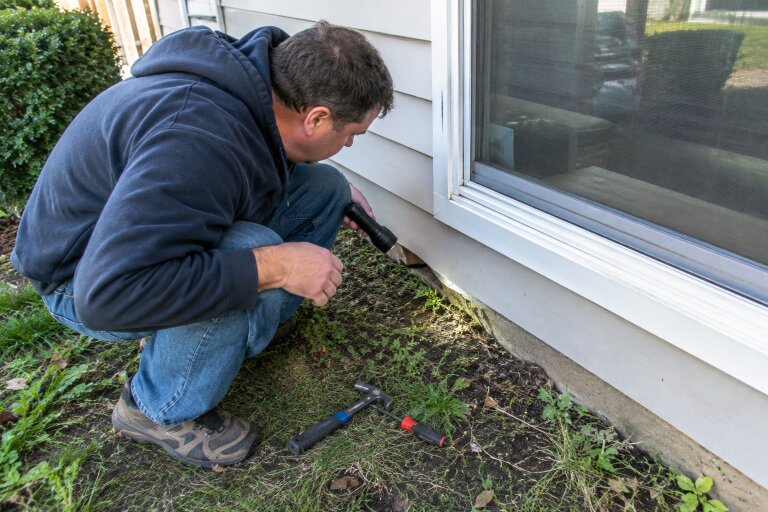
Inside the home, inspect attics, basements, crawl spaces, garages, utility rooms, under sinks, behind appliances, around windows, near exterior doors, and along baseboards. Outside, inspect the foundation line, siding gaps, vents, decks, wood piles, mulch beds, gutters, downspouts, and areas where soil or landscaping touches the structure.
It helps to document what is found. Homeowners can take photos of damaged wood, droppings, holes, mud tubes, nesting material, dead insects, lawn patches, and entry points. They should note where the signs appear, when they first noticed them, and whether the issue is spreading. Tapping wood to check for hollow areas, looking for moisture stains, checking insulation for tunnels or compression, and inspecting exterior gaps can also reveal the extent of activity.
The scale of damage is more concerning when there are signs in more than one zone of the home, when pests are active during the day, when wood feels soft or hollow, when droppings keep reappearing after cleaning, when insulation is disturbed, when wiring appears chewed, or when lawn damage is spreading. To scale pest damage accurately, photos, dates, and notes can help a pest control professional or repair contractor understand how quickly the problem is progressing.
A professional inspection is the safest next step when damage involves structural wood, electrical wiring, recurring pest sightings, foundation areas, or hidden spaces. Pest damage can be difficult to judge from the surface because the visible area may be only a small part of the actual problem. When homeowners scale pest damage by room, material, and source of moisture, it becomes easier to understand whether the issue is isolated or spreading.
Homeowners should avoid opening walls, disturbing large nests, or tearing into contaminated insulation without proper guidance. The goal is to gather enough information to understand urgency, not to expose themselves to bites, droppings, mold, electrical hazards, or structural surprises. A professional can also help scale pest damage when the signs are hidden, scattered, or connected to several parts of the home.
How To Prevent Pest Damage
Homeowners can reduce pest damage by making the home less accessible and less attractive to pests. The best prevention strategy is to manage the three things pests look for: access, moisture, and shelter.
Sealing gaps around doors, windows, pipes, vents, utility lines, siding, and the foundation is one of the most important steps. Even small openings can allow insects or rodents to enter. Door sweeps, weatherstripping, vent screens, caulk, steel wool, hardware cloth, and proper exterior repairs can make a major difference.
Moisture control is equally important. Fix leaking pipes, clean gutters, extend downspouts away from the foundation, improve drainage, ventilate crawl spaces, and replace water-damaged wood. Many destructive pests are drawn to damp, softened, or decaying materials.
Food and clutter control also help. Store pantry goods, pet food, birdseed, and pantry items in sealed containers, clean crumbs and grease, remove pet food overnight, keep trash sealed, and reduce cardboard or clutter in garages and storage areas. Outside, trim shrubs away from the home, keep firewood elevated and away from exterior walls, remove dead wood and leaf piles, avoid excessive mulch against the foundation or letting soil sit too high against the siding, and maintain healthy grass.
Routine inspections are one of the most practical prevention habits. Homeowners should check the attic, crawl space, foundation, garage, yard, and roofline a few times a year. Small changes, such as new gaps, water stains, wood debris, droppings, or lawn patches, are easier to address before they become widespread damage.
When To Call A Pro For Common Household Pests
Homeowners should call a professional pest control service when they see signs of termites, carpenter ants, rodents, repeated cockroach activity, wasp nests in difficult areas, bed bugs, recurring bites, damaged wood, droppings in multiple areas, chewed wiring, unexplained noises in walls, or pest activity that continues after basic prevention steps such as cleaning and sealing. Many common household pests can hide behind walls, under flooring, or in insulation, so repeated signs should not be ignored.
Professional help is especially important when pests may be inside walls, attics, crawl spaces, insulation, flooring, subflooring, wall voids, or structural wood. These areas are difficult to inspect fully without training and proper tools, and surface treatments may not reach the source of the infestation.
A professional can identify the pest, locate entry points, evaluate damage patterns, assess the conditions that are attracting pests, recommend treatment, and help prevent the same issue from returning. The most valuable pest control service is not just the treatment itself. It is the ability to connect the visible pest activity to the hidden conditions that allowed it to happen.
Calling early is usually less expensive than waiting until damage is obvious. Pest control is not only about removing visible pests. It is about protecting the home from hidden activity, reducing health and safety risks, and stopping small warning signs from becoming major repairs.