










In Miami, Florida, a desirable home is increasingly judged by more than interior finishes, square footage, and views. Buyers and renters are also weighing the rhythm of life outside the front door: whether they can exercise nearby, meet friends without a long drive, spend time in public space, and reach practical daily destinations with less friction.
This shift is especially visible in service-oriented projects that combine residential living with hospitality, design, and programming. Readers comparing this model can explore Miami FL real estate experts Faena Residences, a Miami River District residential resource for Faena Residences that outlines its riverfront concept, cultural experiences, wellness offerings, concierge-style services, and design-led approach to life in downtown Miami. Its focus on the relationship between residences and shared experiences makes Faena Residences a useful reference point for evaluating how lifestyle-driven development is being presented in Miami.
Why Miami Housing Is Becoming More Lifestyle-Focused
A residence now serves as a hub for work, recovery, socializing, and entertainment. Shared lounges, co-working spaces, pools, dining areas, fitness rooms, and private event spaces extend daily life beyond the unit. For busy schedules, convenience may matter as much as extra bedrooms or closets. However, a long list of amenities doesn’t guarantee a better home. The key is whether features are accessible, maintained, and useful on an ordinary day. A beautiful rooftop that’s crowded, often reserved, or hot midday may be less practical than a modest, reliable fitness room or shaded courtyard.
Wellness Moves From An Extra To A Routine
Wellness-oriented residences commonly include pools, fitness studios, yoga or meditation rooms, saunas, cold-plunge areas, treatment rooms, and personal training options. The distinction to make is between passive amenities and programmed services. A passive amenity is simply available for use. A programmed service may include classes, trainers, recovery appointments, events, or concierge coordination.
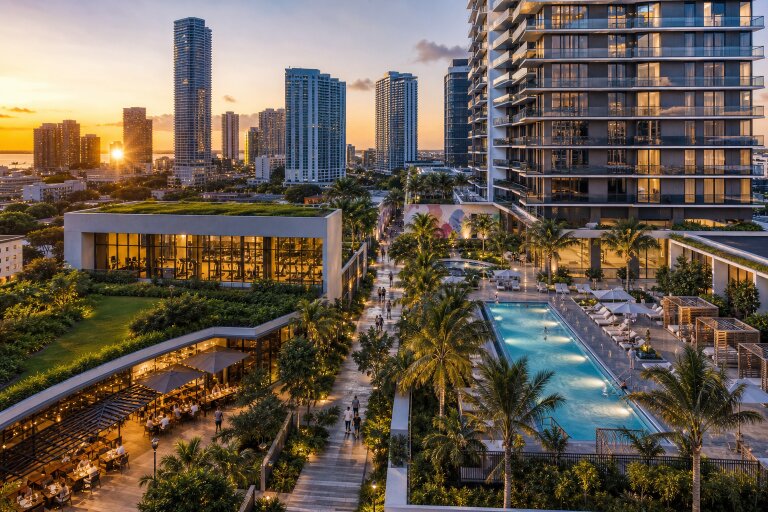
Locating exercise and recovery spaces close to home can make routines easier to maintain, particularly when Miami traffic, rain, and summer heat make an additional cross-town trip less appealing. Buyers should also look past the concept rendering. Ask who operates the facilities, what hours apply, whether outside memberships are permitted, and whether specialized services bring extra fees.
How To Judge Wellness Value
- Frequency: Would you realistically use it each week?
- Access: Is it reserved for residents, shared with guests, or subject to booking limits?
- Operating cost: Are staffing, classes, treatments, or club privileges included in monthly charges?
- Durability: Will the feature remain useful if your schedule, household, or mobility needs change?
Culture Gives A District Identity
Art, architecture, performances, galleries, creative studios, and resident gatherings can give a residential district a recognizable character. When cultural activity is thoughtfully integrated, it creates reasons to linger in a neighborhood and makes shared spaces feel less like a hotel lobby and more like part of a community.
However, culture should complement everyday function rather than substitute for it. An art-filled public plaza has greater long-term value when it is also connected to sidewalks, dining, transit, shade, and places where residents can comfortably gather. The strongest districts balance visual interest with practical services such as groceries, health care, schools, and reliable transportation.
Walkability Is About More Than Distance
Walkability in Miami isn’t just about blocks; it relies on continuous sidewalks, safe crossings, shade, lighting, active ground floors, and destinations worth walking to. A nearby café may not feel convenient if the route involves crossing wide roads, lacks shade, or becomes unpleasant during rain. Miami-Dade’s planning emphasizes connected streets, mixed uses, biking and walking access, and transit links, clarifying the difference between proximity and walkability. Climate-aware design, coverings, trees, breezeways, drainage, and resting spots enhance outdoor comfort. Ground-floor shops and restaurants boost activity but should be checked after dark and on weekends for real noise, traffic, and pedestrian conditions.
Mixed-Use Districts Bring Daily Needs Closer
Mixed-use planning places homes alongside offices, shops, dining, hospitality, services, parks, and transit. This live-work-play model can reduce some short car trips and make spontaneous plans easier. It can also support a fuller street life, especially when retail is active, and public areas are welcoming rather than decorative.
The trade-offs deserve equal attention. New districts may experience construction disruption, delivery traffic, event crowds, restaurant noise, and higher association costs. Retail spaces can also change tenants over time. Buyers should evaluate the district as it exists today, not only as it appears in a future site plan.
What Buyers Should Check Before Choosing A District
- Walk the routes: Test the trip to transit, groceries, parks, schools, and medical care instead of relying on a map.
- Review all recurring fees: Include association dues, valet charges, club costs, reserve funding, and amenity expenses.
- Confirm access rules: Determine which spaces are private, shared, reservable, or available to outside members.
- Study the operating plan: Ask about staffing, maintenance, security, cleaning, and hours of operation.
- Visit at different times: See the neighborhood on a weekday, a weekend, in the evening, and after heavy rain, if possible.
- Separate completed features from proposals: Verify which parks, shops, roads, and transit improvements are already open.
The Role Of Architecture And Climate-Ready Design
Architecture affects both private comfort and neighborhood life. Natural light, outdoor living areas, privacy, ventilation, durable finishes, and flood-conscious site planning matter in South Florida. At street level, welcoming entrances, shaded seating, clear pathways, and thoughtfully designed shared rooms can make a building feel connected rather than isolated.
Memorable design can strengthen a project’s identity, but it should serve real routines. The most durable residential concepts are not defined only by a dramatic lobby or a long amenity brochure. They create a useful daily environment where wellness, culture, public space, and practical mobility work together.
Final Thoughts
Miami’s evolving residential market rewards a broader definition of value. A well-positioned home can offer convenience, connection, and time savings alongside privacy and luxury. Before choosing a lifestyle-focused community, look closely at how it performs in real life: the walk outside, the cost of services, the condition of shared spaces, and the ease of reaching the places you need most.